NC-ORG-GOLDY-i-26-04
work completed on January 13, 2026
UCC: muq27koy
1st owner: Giangiacomo C (Italy)
Monograph
The Sacred in the Everyday
The absence of violent contrasts and total glare creates a space for serene meditation. This is the essence finding its "home."
Chromatic Symbolism
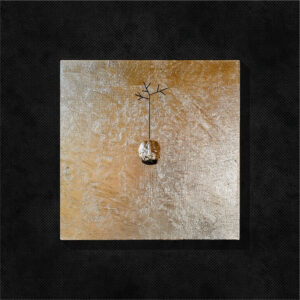
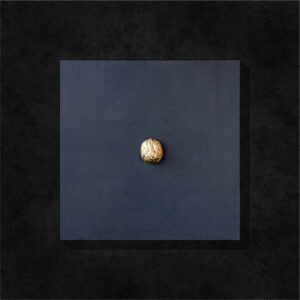
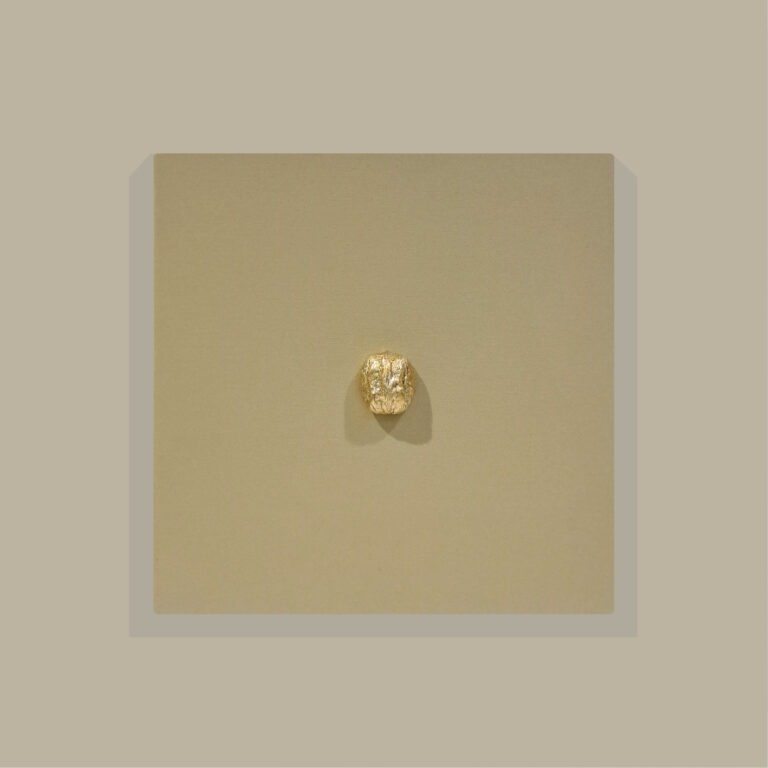
The Golden Walnut retains its value as Imago Dei, a symbol of spiritual perfection; a precious, immutable, and regal core.
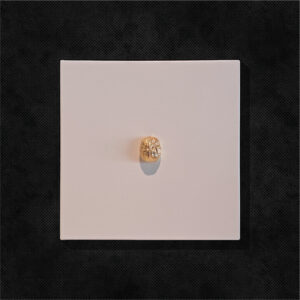
The beige and cream backgrounds are neutral, warm tones, tied to the earth, sand, ancient parchment, and human skin. They represent phenomenal reality: everyday life and the simplicity of earthly existence.
The layering of this double background suggests that reality is composed of levels—from the densest matter to the most subtle yet all are welcoming and soft.
Theology and Philosophy: The Incarnation
The Golden Walnut against beige and cream speaks of a different mystery:
The Golden essence does not remain in an unreachable heaven; it settles upon the earth (the beige). It reminds us that the sacred is not separate from the profane, but contained within it.
Beige is the color of humility. The work suggests that the true greatness of one’s essence lies not in dominance, but in simply being present within the humblest reality.
From a psychological perspective, this represents inner peace: the Self is perfectly at ease within the everyday Ego. It signifies reaching a balance where one’s spiritual nature is not in conflict with one’s human, fallible nature. It is an essence that does not burn or cut, but gently warms.
To the question “How much have you lived in your essence?”, this work responds with a counter-question: “Are you capable of seeing the gold in the ordinary?”
Many seek their essence in extreme mystical experiences or overwhelming passions. This walnut tells us that the essence is here, now, in the silence of a cream-colored room, in the simplicity of a daily gesture. In this context, “to sprout” does not mean to explode, but to ripen with sweetness, like fruit taking color under a mild sun.
A Narrative Meditation
Imagine entering a bright room with walls of light clay or limestone warmed by the sun. There is an ancient silence, not empty, but full of presence. It is the color of desert sand at dawn, or the pages of a beloved book.
At the center of this soft, neutral space, the Golden Walnut shines.
It is not threatening. It is not distant. It feels like a gift left there for us, the treasure hidden in the field, the pearl of great price found upon the shore. This work touches the chords of our nostalgia and our need for peace.
We often think that to “live in our essence” we must become heroes, fight dragons, or build empires. But this image whispers another truth: perhaps the Essence is simply our capacity to recognize the infinite value of our fragile human life.
The “seed seeking answers” isn’t shouting here. It is listening.
The beige ground is soft, ready to welcome it. There is no resistance. Sprouting here is a natural, inevitable act, like breathing.
This work belongs to the souls who have stopped fighting the world and have begun to love it. It is for those who understand that one does not need to flee reality to find God or oneself; one only needs to look closely to discover that even the most neutral, mundane background of our lives is, in fact, the pillow upon which the gold of our Spirit rests.
Living the essence, here, means kindness.
It means treating oneself and others as fragile vessels harboring a divine core.